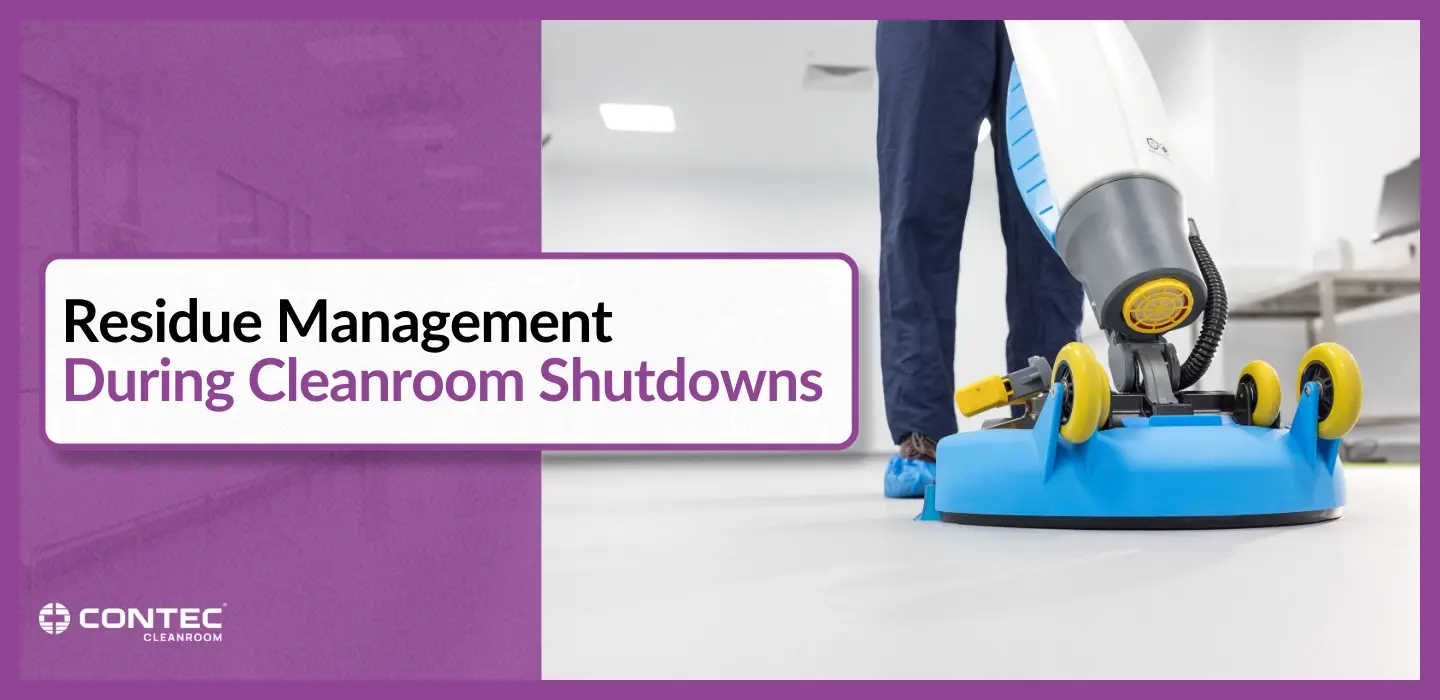
A planned cleanroom shutdown provides an opportunity to complete maintenance, repair surfaces, and address accumulated residues. Those same activities can introduce dust, debris, and microbial contamination that routine cleaning procedures may not be designed to address.
Preparing the environment for production restart requires a coordinated plan that connects pre-shutdown findings with contamination control during maintenance and appropriate cleaning and disinfection afterward. The scope of recovery should reflect the work performed and the actual condition of the cleanroom.
Develop a Coordinated Cleaning and Maintenance Plan
Use the pre-shutdown assessment to identify required work and establish the sequence of maintenance, cleaning, and disinfection. Activities that generate debris, such as construction or equipment modifications, should be accounted for when scheduling subsequent cleaning to avoid unnecessary rework.
Evaluate whether existing cleaning methods and supplies are appropriate for the surfaces, residues, and contamination expected. Plan for suitable cleanroom wipes, mopping systems, cleaning solutions, and disinfectants so materials are available when needed.
Maintain Contamination Control During Shutdown Activities
Contractors, unfamiliar equipment, and tools can introduce contamination into controlled environments. Air handling maintenance and other disruptions may also affect environmental conditions. A shutdown involving minor repairs will present different challenges than one involving extensive construction.
Maintain appropriate contamination control measures wherever practical, including protective garments, shoe covers, and established entry controls as required by facility protocols. Contractors unfamiliar with cleanroom environments should receive instructions on contamination control expectations before entering. Limiting unnecessary contamination during the work can reduce the recovery burden.
Assess and Reset the Space Before Recovery Cleaning
After maintenance and repairs are complete, conduct a walkthrough to evaluate visible soil, dust, debris, and residues. Confirm that equipment and fixtures are in their designated locations and that contractors have removed tools and materials.
Even when an established post-shutdown cleaning SOP is available, the actual condition of the space should guide the level of cleaning required. Discovering misplaced equipment or abandoned tools after disinfection may require additional handling and cleaning, delaying restart preparations.
Remove Soils and Residues Before Disinfection
Cleaning and disinfection serve different purposes. Cleaning physically removes soil, residues, and debris; disinfection reduces viable microbial contamination using appropriate products and established contact times. Gross contamination and accumulated residues should be appropriately removed before disinfection begins.
Select cleaning methods based on the contamination present. Appropriate microfiber materials may help capture larger particles and fibers, while more extensive debris may require HEPA-filtered vacuuming or other approved methods. Accumulated soils and residues may also require different textiles, wiping techniques, or mechanical action than those used for routine disinfectant application.
Give floors particular attention because personnel and equipment traffic can contribute to residue accumulation and surface deterioration. The objective is to achieve the required level of cleanliness before proceeding to disinfection.
Complete Disinfection and Prepare for Restart
Once cleaning is complete, follow the facility’s approved post-shutdown disinfection procedures. Depending on the activities performed and any temporary changes to environmental controls, this may involve more extensive disinfection than the routine daily program. Some facilities include a dedicated recovery disinfection phase.
Apply disinfectants correctly and keep surfaces wet for the required contact time according to product instructions and approved procedures. Cleaning and disinfection prepare the environment for subsequent inspections, environmental monitoring, and applicable release requirements before production resumes.
Use Shutdown Findings to Strengthen Routine Cleaning
Significant residue buildup or surface deterioration should prompt a review of the routine cleaning program. Investigate whether cleaning frequency, technique, procedure adherence, or the methods used to remove residues contributed to the condition.
Use these findings to update SOPs, cleaning schedules, and preventive maintenance practices as appropriate. Addressing the causes of recurring problems can improve facility upkeep between shutdowns and support more consistent contamination control.
 Contec Cleanroom
 Microelectronics Manufacturing, Biotechnology Manufacturing, Medical Device Manufacturing, Pharmaceutical Manufacturing, Cleaning, Compliance and Regulatory, Contamination Control, Article
 return to overview
 back to top
 Pre-Assessment in Cleanroom Shutdown Planning