 Contec Cleanroom
 Life Sciences, Microelectronics Manufacturing, Biotechnology Manufacturing, Medical Device Manufacturing, Pharmaceutical Manufacturing, Residue Management, Article
Disinfectant Residues: Mitigation and Management in Cleanroom Environments
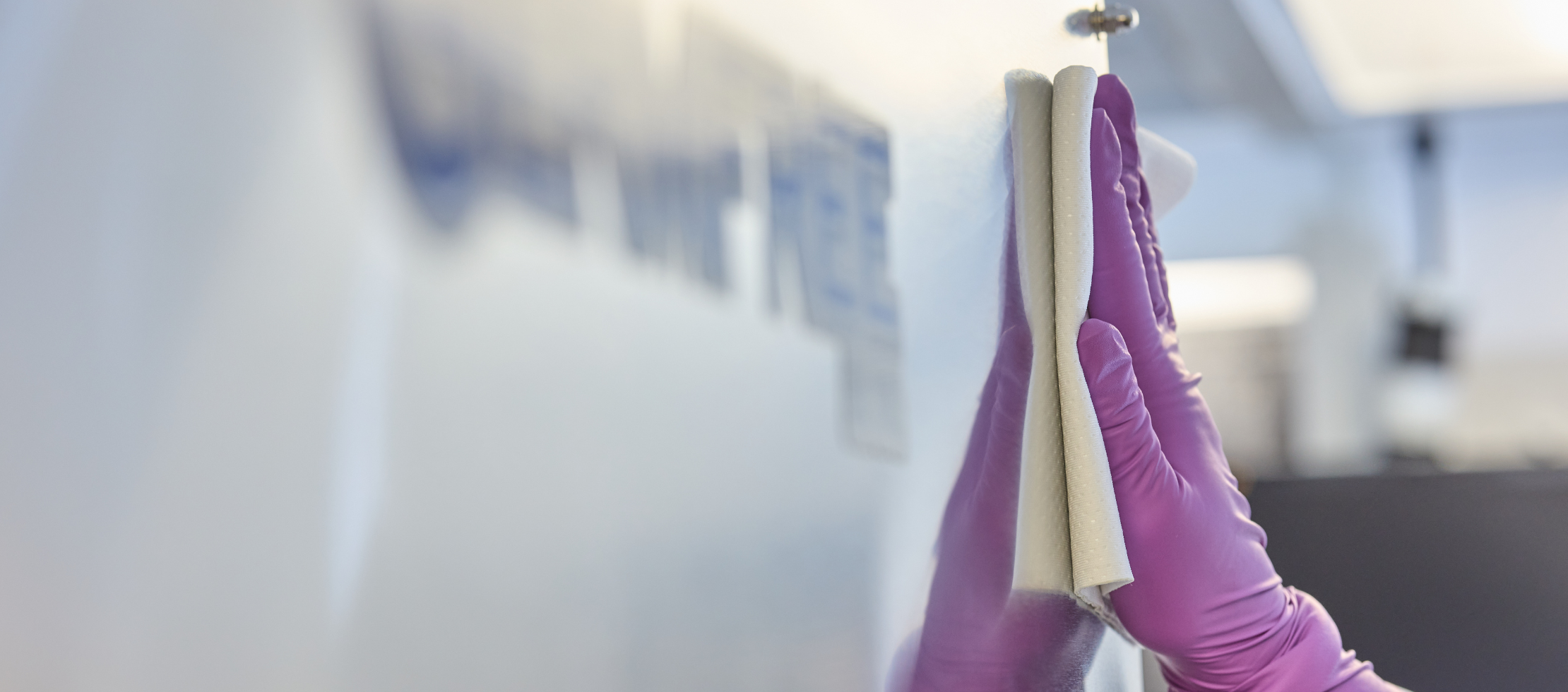
Disinfectant residues are the non-volatile materials that remain on cleanroom surfaces after disinfectants dry. Because they are unavoidable with most disinfectant products and can interfere with contamination control, regulatory bodies recognize the need to manage these residues as part of an effective Contamination Control Strategy in controlled environments.
What Are Disinfectant Residues?
Disinfectant residues are substances left behind on surfaces, equipment, windows, or floors after a disinfectant has been applied and allowed to dry. They can be composed of active ingredients, stabilizers, surfactants, or other formulation components that remain once volatile components evaporate.
Why Do Residues Form in Cleanrooms?
Residues occur because most disinfectants contain non-volatile compounds that do not evaporate completely. These compounds remain on surfaces after the wet contact time and drying, and repeated application without a removal step causes accumulation over time.

What Problems Can Disinfectant Residues Cause?
Disinfectant residues can create operational and cleanliness issues, including:
- Sticky or slippery floors and doors
- Streaks and surface discoloration
- Visual cleanliness concerns
- Contamination risks if not addressed
Over time, unmanaged residues can degrade facility surfaces and require costly deep cleaning or reconstruction.
How Are Residues Typically Monitored?
In many cleanrooms, disinfectant residues are often monitored through visual inspection. Because residue appearance doesn’t always correspond to quantity, facilities should incorporate residue evaluation into contamination control practices to identify areas where buildup is occurring.

What Is a Residue Removal Step and How Does It Help?
A residue removal step is an intentional part of a cleaning and disinfection program designed to mitigate residue accumulation. It can involve rinsing surfaces after contact time with various agents, such as presaturated 70% isopropyl alcohol wipes, Water for Injection (WFI), purified water, hydrogen peroxide solutions, detergents followed by a water rinse, and/or dry wiping.
Periodic residue removal (every few weeks or monthly, depending on disinfectant chemistry and frequency of use) helps prevent buildup and maintain cleanliness.

What Is the Residue on Evaporation (RoE) Test?
The Residue on Evaporation (RoE) test is a method for quantifying potential residue formation. A 100 mL sample of disinfectant is evaporated slowly at about 104 °C for several hours, then weighed after cooling. The difference in weight is recorded in parts per million (ppm), indicating how much non-volatile residue the disinfectant leaves behind.
Results vary significantly between products and depend on formulation ingredients such as stabilizers, preservatives, pH adjusters, and odor mitigators.
What Are General Guidelines for Removal of Disinfectant Residues?
There are multiple ways to build a residue removal step into a cleaning and disinfection program.
 return to overview
 back to top