A planned cleanroom shutdown provides a valuable opportunity to address disinfectant residues that may be difficult to manage during routine production. While residue accumulation is a common challenge in controlled environments, allowing it to build up over time can create cleaning difficulties, potential contamination risks and even safety concerns.
Rather than simply removing visible residues, facilities should use shutdowns to evaluate their cleaning and disinfection processes, identify areas for improvement and develop strategies to prevent excessive residue accumulation in the future.
Identify Where Residues Are Accumulating
Before beginning residue removal, it's important to understand where residues are accumulating and what may be causing them.
During a shutdown walkthrough, facilities should pay particular attention to areas that are often overlooked during routine cleaning.
Cleanroom shutdown walkthrough area include:
- Floors: Sticky surfaces or visible buildup may indicate accumulated disinfectant residues. These residues can also create safety concerns and potentially contribute to the spread of contamination.
- Windows and glass: Streaking or film buildup can indicate that disinfectants are not being effectively removed.
- Walls and stainless steel: Dripping, streaking or discoloration may reveal inconsistencies in disinfectant application techniques.
- Hard-to-reach areas: Spaces underneath tables, behind equipment and around difficult-to-access surfaces may accumulate residues because they are not routinely cleaned effectively.
Residues can vary in appearance depending on the disinfectant chemistry, ranging from white or colored deposits to clear films that may be more difficult to identify.
Understanding the disinfectants being used, how frequently surfaces are cleaned and when residues were last removed can help facilities determine the most appropriate remediation approach.
Prioritize Residue Removal Based on Risk
Not all residue accumulation presents the same level of concern. Facilities should prioritize areas based on the extent of buildup, potential contamination risks, surface conditions and operational impact.
Floors are often a practical starting point because residues can accumulate across large areas, create sticky surfaces and potentially contribute to contamination transfer throughout a facility.
However, visible residue is only part of the picture. Areas behind or underneath equipment may require additional attention, particularly when routine cleaning procedures cannot adequately reach these surfaces.
A shutdown also provides an opportunity to inspect surfaces for underlying damage, such as corrosion, rust or etching, that may have been hidden beneath accumulated residues.
Choose the Right Chemistry and Cleaning Tools
Effective residue removal requires more than applying another cleaning solution. Dissolving a residue does not necessarily mean it has been removed from the surface. The cleaning process must also physically lift and remove the dissolved material.
Selecting the appropriate removal method depends on several factors, including the disinfectant chemistry, surface material, extent of accumulation and accessibility of the area.
Depending on the application, facilities may consider:
- Cleaning agents: Appropriate detergents or other compatible solutions that help dissolve accumulated residues.
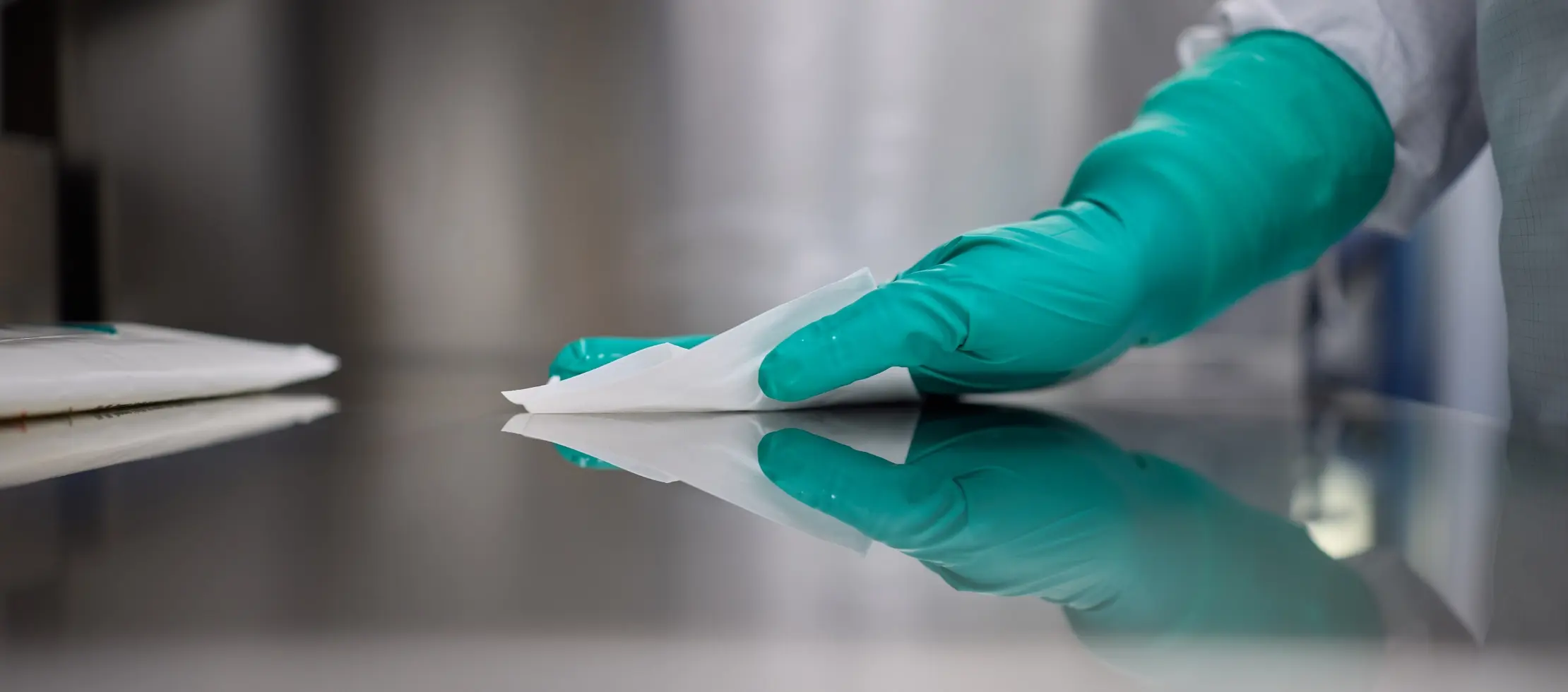
- Cleanroom wipes: Materials capable of absorbing cleaning solutions and physically removing residues from surfaces.
- Mopping systems: Tools designed to distribute cleaning solutions and collect dissolved residues from floors.
- Mechanized cleaning equipment: Systems that combine mechanical scrubbing with residue pickup, particularly useful for larger floor areas or significant buildup.
The cleaning textile itself is also an important consideration. Different materials, including microfiber and polyester, offer different cleaning characteristics that can influence residue removal effectiveness.
Working with cleaning and disinfectant suppliers can help facilities identify compatible products and techniques based on the chemistry of the residues and the surfaces being cleaned.
Prevent Residues from Returning After Shutdown
Removing accumulated residues is only one part of an effective remediation strategy. Without addressing the underlying causes, facilities may experience the same buildup after production resumes.
A shutdown presents an opportunity to observe current cleaning practices and identify techniques that may contribute to residue accumulation. Excessive solution application, inadequate mop wringing or inconsistent cleaning methods can leave unnecessary disinfectant behind.
Facilities should evaluate whether their current procedures, tools and cleaning frequencies are effectively managing residues.
These findings can help guide improvements to standard operating procedures (SOPs), operator training and routine residue removal schedules.
Make Residue Management Part of Your Contamination Control Strategy
A successful shutdown should accomplish more than restoring surfaces to an acceptable condition. It should also provide insight into how cleaning and disinfection programs can be improved.
Residue management should be treated as an ongoing component of a facility's Contamination Control Strategy (CCS), with periodic evaluations to determine whether established procedures remain effective.
By identifying residue sources, selecting appropriate removal methods and implementing preventive controls, facilities can reduce the likelihood of excessive accumulation between shutdowns.
The goal isn't simply to remove residues during a shutdown. It's to establish a sustainable approach that keeps them under control long after production resumes.
 Contec Cleanroom
 Microelectronics Manufacturing, Biotechnology Manufacturing, Medical Device Manufacturing, Pharmaceutical Manufacturing, Cleaning, Compliance and Regulatory, Contamination Control, Residue Management, Article
 return to overview
 back to top