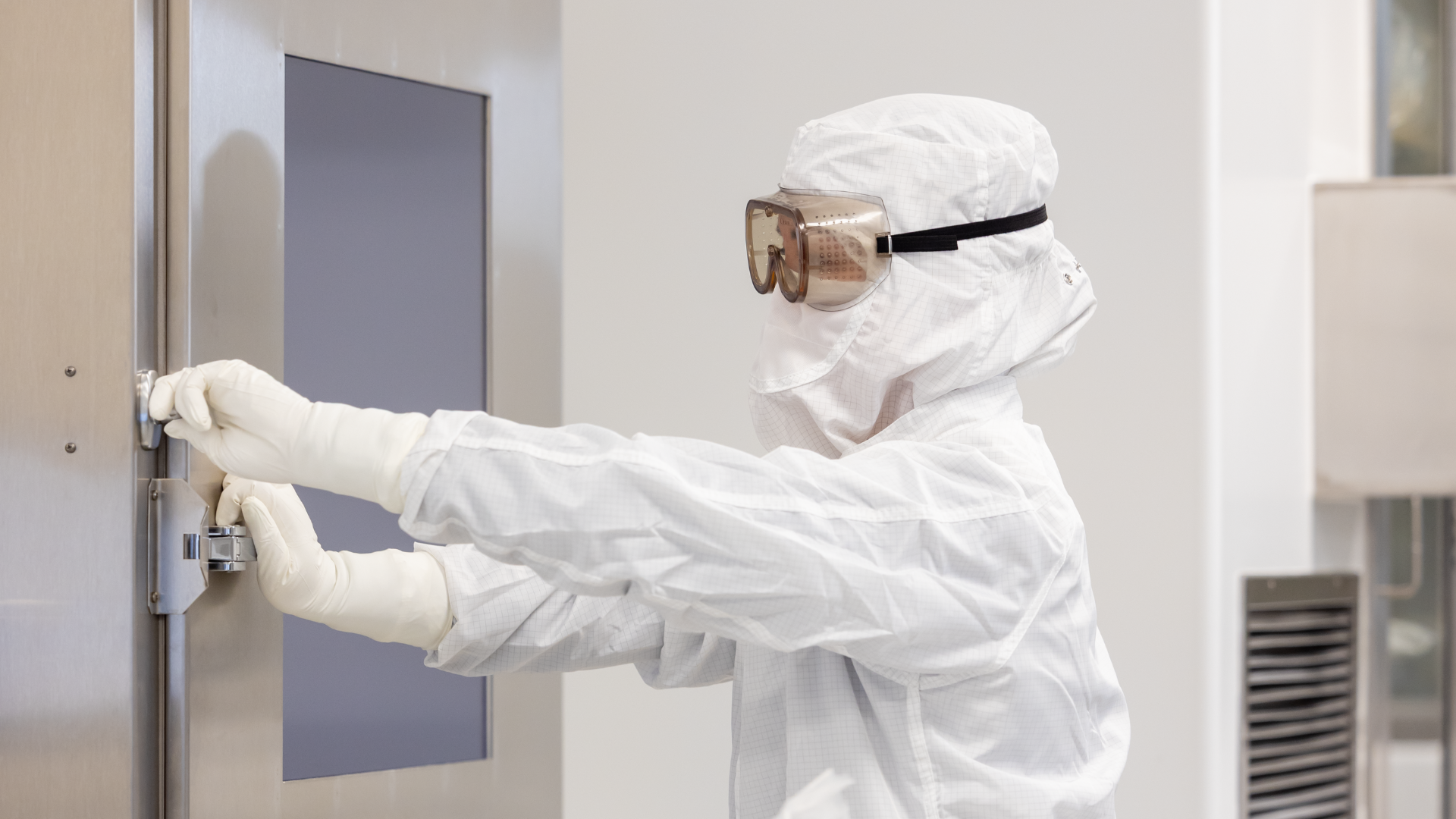
Material transfer is a critical part of contamination control in any cleanroom environment. Every item that enters a controlled space has the potential to introduce particles, residues, or microbial contamination, which is why a consistent cleanroom cleaning procedure is essential.
Evaluate Packaging First
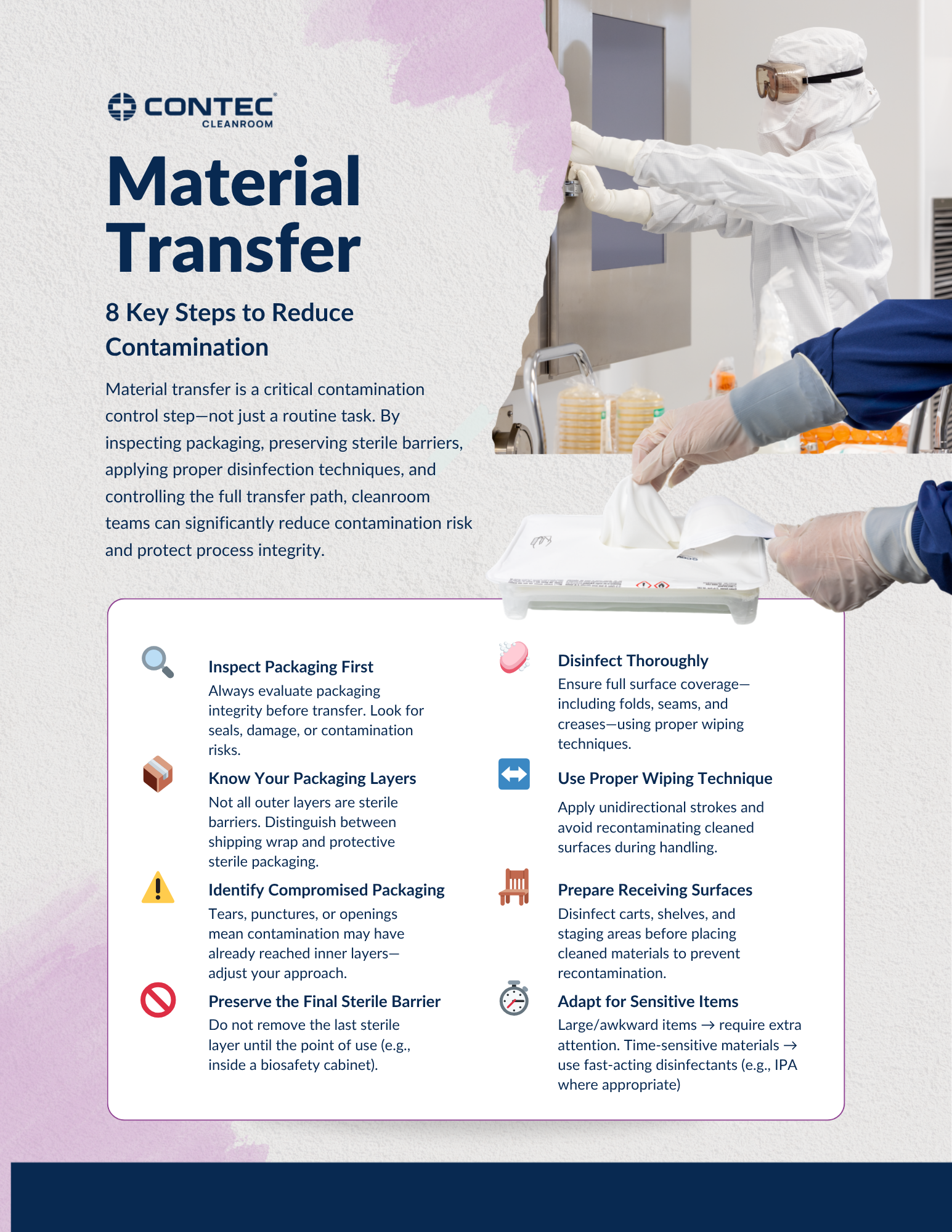
The first step in material transfer is evaluating the packaging. Some items may appear to be double- or triple-bagged, but the outermost layer may only be for shipping and not part of a true sterile barrier system. In those cases, removing the outer layer is not necessarily a valid material improvement step. Operators should inspect packaging carefully to determine whether the item can be transferred by unwrapping it or if it requires a cleanroom disinfectant.
Check for Compromised Packaging
Packaging condition also matters. If a bag is perforated, torn, or pierced, contamination may already have reached inner surfaces. That means the transfer method must change. A strong cleanroom contamination control program depends on checking every item at the time of transfer, not assuming all packaging performs the same way.
Focus on Complete Surface Coverage
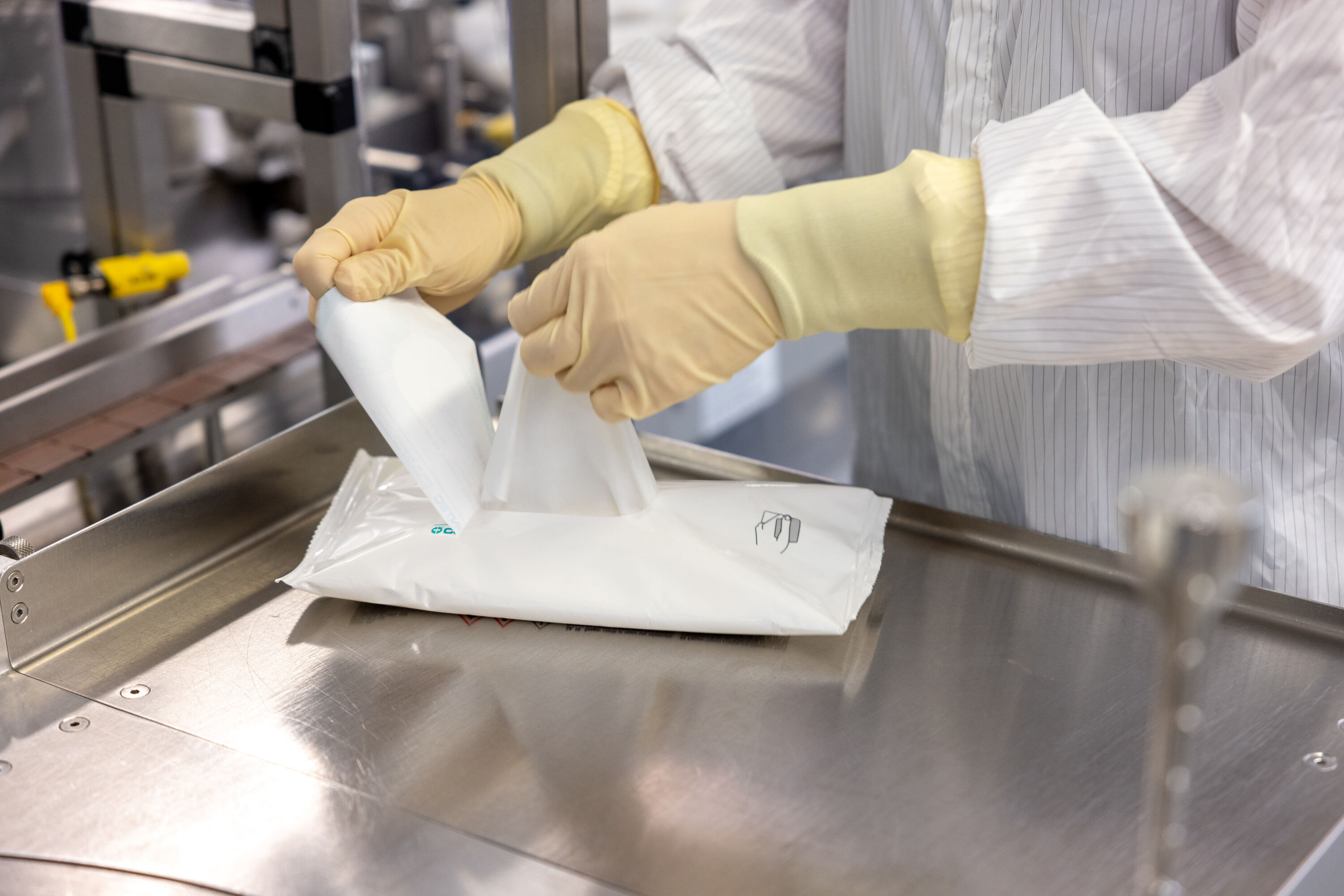
When disinfection is required, full surface coverage is the priority. Flat surfaces may be easy to wipe, but folds, seams, and creases must also be disinfected thoroughly. Using cleanroom wipes with proper wiping technique helps ensure all areas are treated effectively.
Prepare the Receiving Surface
It is also important to protect the item after disinfection. A wiped package should only be placed on a receiving cart or staging surface that has already been cleaned according to site protocols. Otherwise, the item can be recontaminated immediately.
Choose the Right Disinfectant for Sensitive Materials
For time-sensitive materials, disinfectant selection is especially important. Frozen or temperature-sensitive items still need full surface disinfection, but they may require a chemistry with a shorter contact time. Depending on the application, facilities may use sterile IPA, disinfectant products such as ReadySAT with PeridoxRTU® Sporicidal Wipes or other cleanroom products validated for their process.
Support Better Cleanroom Performance
Effective material transfer depends on good technique, proper packaging assessment, and the right cleanroom disinfectants. With the right procedure in place, facilities can reduce contamination risk and support cleaner, more consistent operations.
Watch this episode of Inside the Cleanroom for more information on tips and best practices for material transfer.
.jpg)