 Contec Cleanroom
 07/13/2026

 Cleanroom,
Decontamination,
Environmental Monitoring
Cleanroom,
Decontamination,
Environmental Monitoring
5 Things to Consider When Transferring Materials into a Cleanroom
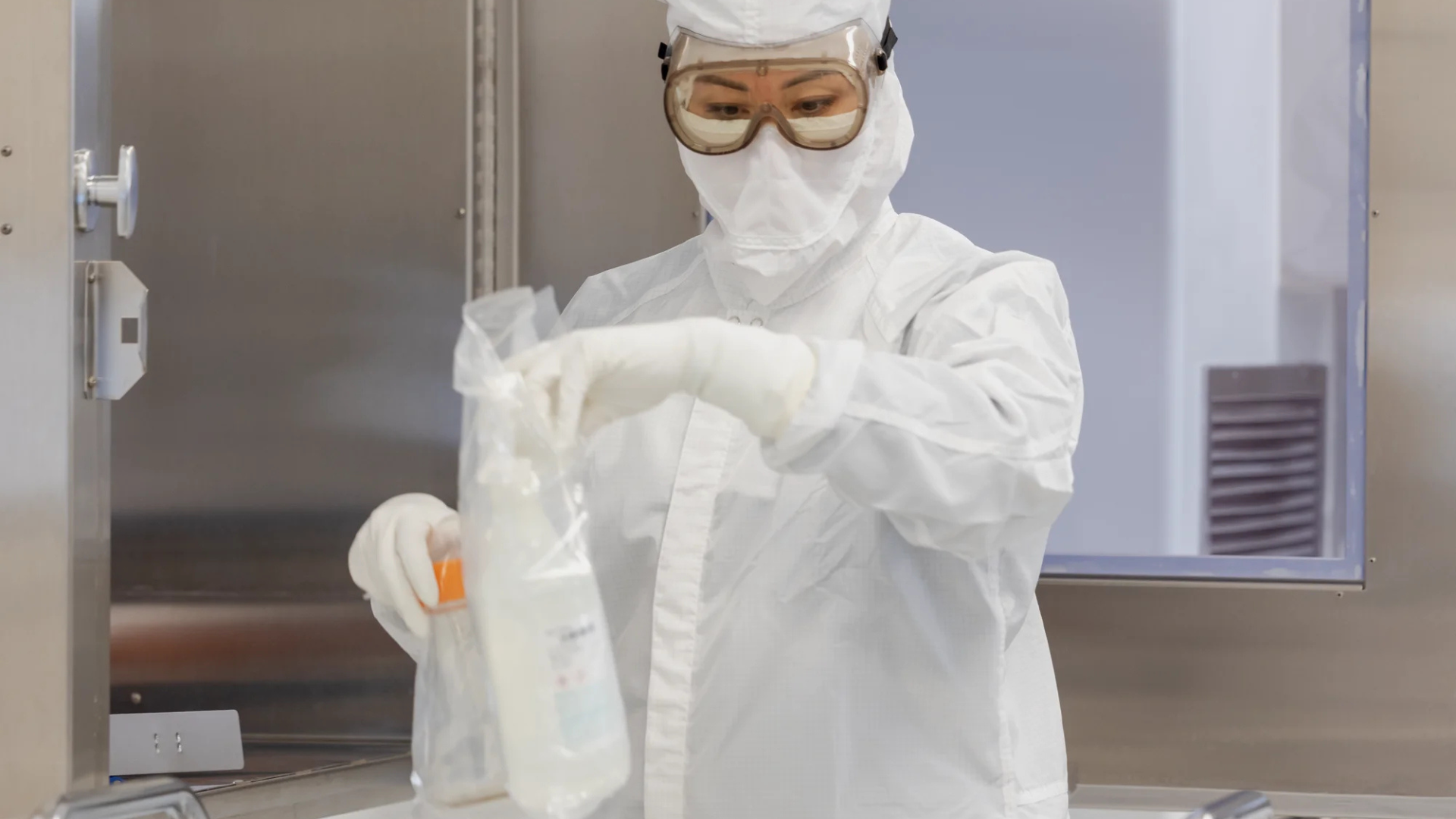
Know the full journey before the material reaches the cleanroom
Material transfer control does not begin at the cleanroom door. It begins with how the item is sourced, packaged, received, stored, staged, and transported before it reaches the classified area.
Materials travel through conditions that can add viable and nonviable contamination. That matters because a cleanroom cleaning procedure can be technically followed at the transfer point and still fail if upstream conditions increase the contamination burden beyond what the process can reliably control.
Important questions for material transfer include:
-
Is the item received in cleanroom-compatible packaging?
-
Has the outer packaging been exposed to cardboard, pallets, dust, moisture, or uncontrolled storage?
-
Is the item staged in a controlled area or in a general supply room?
-
Are reusable totes, tube boxes, or trays stored in a way that prevents contamination accumulation?
In one case study, insects in the cleanroom were eventually linked not to a pest management program failure or operator negligence, but to hard-to-clean tube boxes stored on a top shelf in a general supply room. The transfer procedure was followed, but the storage condition and container design created a risk the procedure could not fully overcome.
For cleanroom cleaning supplies, such as cleanroom mop systems, cleanroom wipes, and other consumables, the same logic applies to evaluate the entire material pathway, not just the final wipe-down.
Do not confuse spraying with effective disinfection
A sprayed surface and a completed timer do not necessarily mean a material is ready for transfer.
One of the strongest lessons is that transfer disinfection must include a defined method. In the case study, an operator under time pressure sprayed a sporicidal disinfectant onto materials rather than applying the sporicidal disinfectant with a presaturated wipe. In the industry this is known as “spray and pray”, and it resulted in failure because the chemistry was treated as if it would do all the work.
For cleanroom cleaning, wiping matters because it adds mechanical action. Contamination can be trapped in folds, seams, corners, creases, handles, and textured surfaces. Spraying alone may not remove soil or distribute disinfectant evenly across complex surfaces.
A robust SOP should define:
-
The required cleanroom disinfectant for each transfer step
-
The correct wipe
-
The wiping technique, such as unidirectional overlapping strokes
-
The validated contact time
-
When to use a new wipe
-
How to address difficult surfaces, seams, or recesses
This is also where product selection matters. Pairing the right wipe and a validated cleanroom disinfectant helps support consistent transfer disinfection, but they must be paired with correct technique, training, and adequate time.
Match the disinfectant to the risk, not convenience
Material transfer from unclassified or lower-classified areas into cleanrooms often introduces the risk of spore forming microorganisms, especially when materials have been near cardboard or uncontrolled areas. When chemical disinfection is the transfer method, a sporicidal agent is expected as the first step from unclassified to classified areas, unless a justified packaging-removal strategy provides the contamination reduction step.
Be cautious against defaulting to IPA simply because it dries quickly and is easy to use. IPA may be appropriate for certain applications, especially where compatibility limits options, but it should not be treated as the universal answer for incoming materials.
In practice with chemical disinfection, consider:
-
Using a sporicidal cleanroom disinfectant, such as a product like PeriodoxRTU where appropriate
-
Using IPA where justified by surface compatibility, residue management, or later-stage transfer requirements, but do not rely on IPA alone unless a risk assessment supports it
-
Reviewing environmental monitoring data to determine whether spore-formers or atypical organisms are appearing in areas where the transfer process should have controlled them
-
Using sterile disinfectants for higher-grade areas where required or justified by site risk
Annex 1 emphasizes contamination prevention through a holistic CCS rather than reliance on isolated controls. That means the disinfectant choice should be linked to environmental monitoring trends, material type, transfer route, cleanroom grade, packaging configuration, contact time, and disinfectant efficacy data.
Understand packaging integrity before deciding to unwrap, wipe, or disinfect
Not every packaging layer is equal.
In one case study materials appeared to be bagged, but the bags were actually open-ended and intended only to hold tubing in place. Because the packaging was not a true protective layer for cleanroom introduction, removing an outer layer was mistaken for a meaningful “material improvement step.” The material should have been manually disinfected for transfer.
This is a common cleanroom transfer risk: personnel may assume that bagged, wrapped, or kitted materials are protected when the packaging is actually designed for shipping, organization, or handling—not contamination control.
Before defining the transfer process, determine:
-
Is the packaging sealed or open-ended
-
Is it cleanroom-compatible
-
Is it single, double, or triple-bagged
-
Are the bag layers intact
-
Is each layer removed at the correct grade transition
-
If packaging integrity is compromised, is an additional layer removal or chemical disinfection required?
For kitted materials, look at where the kit was assembled, where it was stored, where it will be opened, and whether items inside the kit were exposed during warehousing or labeling steps. A kit prepared in a clean environment can lose its contamination-control value if it is later opened or stored in an uncontrolled space.
Verify that the procedure is executable in real life
A cleanroom cleaning procedure can look complete on paper and still fail during execution.
Failures can come from gaps between the SOP and real-world conditions: not enough time or personnel, an undefined application method, hard-to-disinfect container surfaces, unclear packaging assumptions, and retraining handled only as “read and understood” rather than practical demonstration.
This is why observation matters. The investigation from one case study only advanced when the team left the conference room and performed Gemba walks. They watched the transfer process, inspected containers, asked what was inside boxes, and challenged the assumption that “all accessible surfaces” could actually be disinfected.
A resilient material transfer program should include:
-
Hands-on training for cleanroom wiping and transfer disinfection technique
-
Qualification or periodic observation of operators; adequate staffing and schedule time for transfer activities
-
Defined responses for damaged, open, dirty, or hard-to-clean materials
-
Involvement from warehouse, quality, manufacturing, facilities, and cleaning teams
-
Outine review of EM data, deviations, and contamination investigations
The key point is that material transfer is not a single SOP. It is a connected system of people, products, procedures, facility design, monitoring data, and contamination control decisions.
A cleanroom cleaning procedure can look complete on paper and still fail during execution
Material transfer can feel like a tedious activity—something operators have to complete before the “real work” begins. But poor transfer practices can quietly introduce contamination into controlled environments.
Ultimately, strong material transfer programs depend on culture as much as procedure. When every team understands its role, questions assumptions, and treats each transfer as a contamination control point, material transfer becomes more than a task—it becomes part of the site’s commitment to protecting the cleanroom, the process, and the patient.
Do you have material transfer mysteries in your cleanroom? You’re not alone! Check out our second episode of Cleanroom Mysteries: What Your Material Transfer Process Isn’t Telling You.
 return to overview
 back to top